Dr Charlie Tyack
Clinical Psychologist

Tag: psychology

  • By popular demand – a clear introduction to EMDR!

    I receive repeated requests for a clear introduction to EMDR (eye-movement desensitisation and reprocessing) – what it is, who it can help, and what sessions look like. On that basis, I made the following video:

    EMDR is a powerful type of therapy that was initially developed by Francine Shapiro for working with traumatic events, but which has since been found to be effective with a wide range of other mental health concerns. It can also be helpful beyond mental health, for example in coaching.

    The “eye-movement” part of the name EMDR is also somewhat misleading, as we do not have to use eye-movements. We can use tapping, which can be performed either by the therapist or via self-tapping. We can use left-right sounds. We can also use more creative techniques like painting or even drumming. The main thing we are looking for is something that help us to keep one part of our attention on the event we are processing, and another in the here and now.

    I hope the video is helpful. If you have any questions, do get in touch!

  • Why Sleep Hygiene Alone Isn’t Fixing Your Sleep – And What to Do Instead

    If you’ve ever struggled with sleep, you’ve probably been offered the usual advice: avoid screens before bed, keep your room dark, and stick to a bedtime routine. While these sleep hygiene tips sound great in theory, they don’t always work—especially for those dealing with insomnia.

    Here’s the problem: Sleep hygiene is about creating a good sleep environment, but it doesn’t address the real issue behind chronic sleep struggles—your relationship with sleep itself. If you’ve tried everything and still find yourself tossing and turning, you’re not alone. In fact, rigidly following sleep hygiene rules can sometimes increase sleep anxiety, making it even harder to rest.

    That’s where Cognitive Behavioral Therapy for Insomnia (CBT-I) comes in. Unlike sleep hygiene, CBT-I is a structured, evidence-based approach that targets the thoughts and behaviors keeping you awake. It helps you break free from the cycle of sleepless nights by resetting your sleep patterns, managing anxiety around sleep, and rebuilding confidence in your ability to rest.

    I have been delivering CBT-I to people across the lifespan in adult and paediatric setting since training in it on Colin A. Espie‘s course at University of Glasgow sleep centre in 2011. I initially delivered it as part of a trial looking at CBT for insomnia in primary care that resulted in this article.

    Each group was facilitated by two IAPT psychological wellbeing practitioners [i.e. me at the time], recent graduates, most but not all with psychology undergraduate degrees, who had undertaken a 1-year 1 day per week certificate course in low-intensity psychological interventions.

    I have been lucky enough to have opportunites to work in sleep and build experience over the subsequent years, both before and since becoming a clinical psychologist. I have witnessed the huge beneficial impacts that optimising people’s sleep can have. I am currently working on a tailored CBT for insomnia package – watch this space for further updates.

    In my latest video, I break down why sleep hygiene alone isn’t the solution—and how CBT-I can help you finally get the sleep you need. If you’re tired of struggling with insomnia, this might be the game-changer you’ve been looking for.

    Watch now and take the first step toward better sleep!

    #BetterSleep #CBTI #Insomnia

  • Healing Grief with EMDR and ACT Therapy: A Path to Recovery

    Grief is a universal experience, yet it affects each of us in deeply personal ways. Whether from the loss of a loved one, the end of a relationship, or another life transition, grief can sometimes feel overwhelming and unending. While time can ease the pain, certain therapies can actively help us process grief in a healthier, more meaningful way.

    Two powerful, evidence-based approaches—EMDR (Eye Movement Desensitization and Reprocessing) and ACT (Acceptance and Commitment Therapy)—offer unique ways to navigate grief, heal from loss, and rebuild a life that honors both your pain and your growth.


    What is EMDR, and How Can It Help with Grief?

    EMDR is best known as a trauma therapy, but it is increasingly used to help people process grief and loss. Developed by Dr. Francine Shapiro, EMDR helps individuals reprocess distressing memories by using bilateral stimulation (such as guided eye movements or tapping) to reduce the emotional intensity of painful thoughts and experiences.

    How EMDR Supports Grief Healing

    1. Reduces Emotional Overwhelm: EMDR helps process and reduce the intensity of sadness, guilt, or trauma-related symptoms that can accompany grief.
    2. Reframes Painful Memories: Instead of feeling trapped in the past, EMDR allows you to process memories in a way that feels meaningful.
    3. Encourages Adaptive Healing: EMDR doesn’t erase grief—it helps integrate the loss into your life in a way that allows for emotional balance.

    Many people who experience complicated grief (prolonged or traumatic grief) can find that EMDR helps them release some of the emotional blockages keeping them stuck.


    What is ACT, and How Can It Help with Grief?

    Acceptance and Commitment Therapy (ACT) encourages people to accept their emotions rather than suppress or avoid them. Instead of fighting against grief, ACT helps you develop psychological flexibility—allowing you to feel your emotions fully while still taking steps toward a meaningful life.

    How ACT Supports Grief Healing

    1. Encourages Emotional Acceptance: ACT teaches that pain is a natural part of life, and fighting grief often makes it worse. Instead, ACT promotes making space for your emotions.
    2. Aligns Actions with Values: ACT helps people identify and make moves towards what truly matters—whether that’s relationships, creativity, or self-care.
    3. Uses Mindfulness to Reduce Suffering: Through mindfulness techniques, ACT helps individuals stay present rather than getting stuck in rumination about the past or fear of the future.

    By embracing grief rather than avoiding it, ACT empowers people to integrate loss into their lives in a way that fosters growth and meaning.


    Which Therapy is Right for You?

    EMDR and ACT offer valuable tools for grief healing, but they serve different purposes:

    • If you feel stuck in painful memories or trauma-related grief, EMDR may help reprocess those emotions in a way that brings relief.
    • If you struggle with avoidance, emotional suppression, or difficulty moving forward, ACT can help you accept your grief while building a fulfilling life.

    The approaches are complementary: a combination of both can often be the most effective strategy.


    Final Thoughts: You Don’t Have to Grieve Alone

    Grief is not something to “get over,” but it is something you can learn to live with in a way that allows for healing and peace. Whether through EMDR, ACT, or another therapeutic approach, support is available.

    If you or someone you love is struggling with grief, consider reaching out to me or another mental health professional trained in these therapies. Healing is possible, and you deserve the space to process your loss in a way that honors your experience.

    💙 Have you tried EMDR or ACT for grief? Share your thoughts in the comments.

    #GriefHealing #EMDR #ACTTherapy #MentalHealth #HealingFromLoss

  • Using EMDR to Tackle Future Anxiety: The Flashforward and Future Template Techniques

    Using EMDR to Tackle Future Anxiety: The Flashforward and Future Template Techniques

    When most people think of EMDR (Eye Movement Desensitization and Reprocessing) therapy, they often associate it with healing past traumas. While EMDR is indeed renowned for its transformative power in processing distressing memories, its applications extend far beyond the past. One of its most innovative uses is addressing anxiety and fear about future events through techniques like the Flashforward and Future Template. These approaches empower people to break free from paralysing fear of the unknown and build confidence to face what lies ahead.

    The Flashforward Technique: Facing the Worst-Case Scenario

    What is it? The Flashforward Technique in EMDR is designed to tackle anticipatory anxiety by targeting imagined worst-case scenarios. This technique helps clients confront their fears about what might happen and process the intense emotional response tied to these fears.

    How it works: The therapist begins by supporting the client to imagine the feared future event. This might be a catastrophic failure, a personal loss, or any overwhelming possibility causing distress. Once the worst-case scenario is visualized, the therapist uses bilateral stimulation (such as eye movements or tapping) to process the emotions and reduce the fear’s intensity.

    Why it helps: By addressing the fear at its core, the Flashforward Technique desensitises the individual to the catastrophic imagery, allowing them to think about the future without the same level of dread or avoidance. Clients often report feeling a sense of calm and resilience as well as thinking differently about the future event after engaging in this process.

    The Future Template: Building Confidence for What’s to Come

    What is it? The Future Template prepares clients to handle future situations with confidence and ease. Rather than addressing fears directly, this technique installs a positive and adaptive response to upcoming challenges.

    How it works: The therapist collaborates with the client to imagine a future event where they want to feel empowered and capable. This might be a job interview, public speaking event, a driving test, or even navigating a challenging conversation. Once the scenario is envisioned, we use bilateral stimulation to reinforce positive beliefs and emotions associated with the event. This helps the brain “rehearse” success, strengthening neural pathways that support confidence and competence.

    Why it helps: The Future Template helps clients mentally prepare for upcoming situations by shifting their mindset from fear to empowerment. It replaces self-doubt with positive beliefs like “I am capable” or “I can handle this.” This shift allows clients to approach future events with a sense of readiness and self-assurance.

    Who Can Benefit from These Techniques?

    Both the Flashforward Technique and Future Template are effective for individuals experiencing:

    • Performance anxiety: Fear of public speaking, auditions, or presentations
    • Life transitions: Moving to a new city, starting a new job, or entering a new relationship
    • Anticipatory grief: Anxiety about losing a loved one or other impending challenges
    • Generalized anxiety: Persistent worry about the future

    Combining the Past, Present, and Future in EMDR

    EMDR therapy is unique in the way it addresses past, present, and future concerns. By processing past traumas, clients often find that their present triggers and future fears become less overwhelming. The Flashforward Technique and Future Template take this a step further by directly targeting how individuals perceive the future, ensuring they’re not just free from their past but also equipped to thrive moving forward.

    Final Thoughts

    The future is inherently uncertain, and it is natural to sometimes feel apprehensive about what’s to come. However, with the tools provided by EMDR—particularly the Flashforward Technique and Future Template—individuals can transform their relationship with the future. These techniques address anxiety, replacing it with a sense of calm, confidence, and readiness.

    If you’re struggling with future-focused anxiety or want to explore how EMDR can help, consider EMDR. The journey to a brighter, more empowered future could be just a session away.

  • I am an Accredited EMDR Practitioner

    I am an Accredited EMDR Practitioner

    My EMDR information video

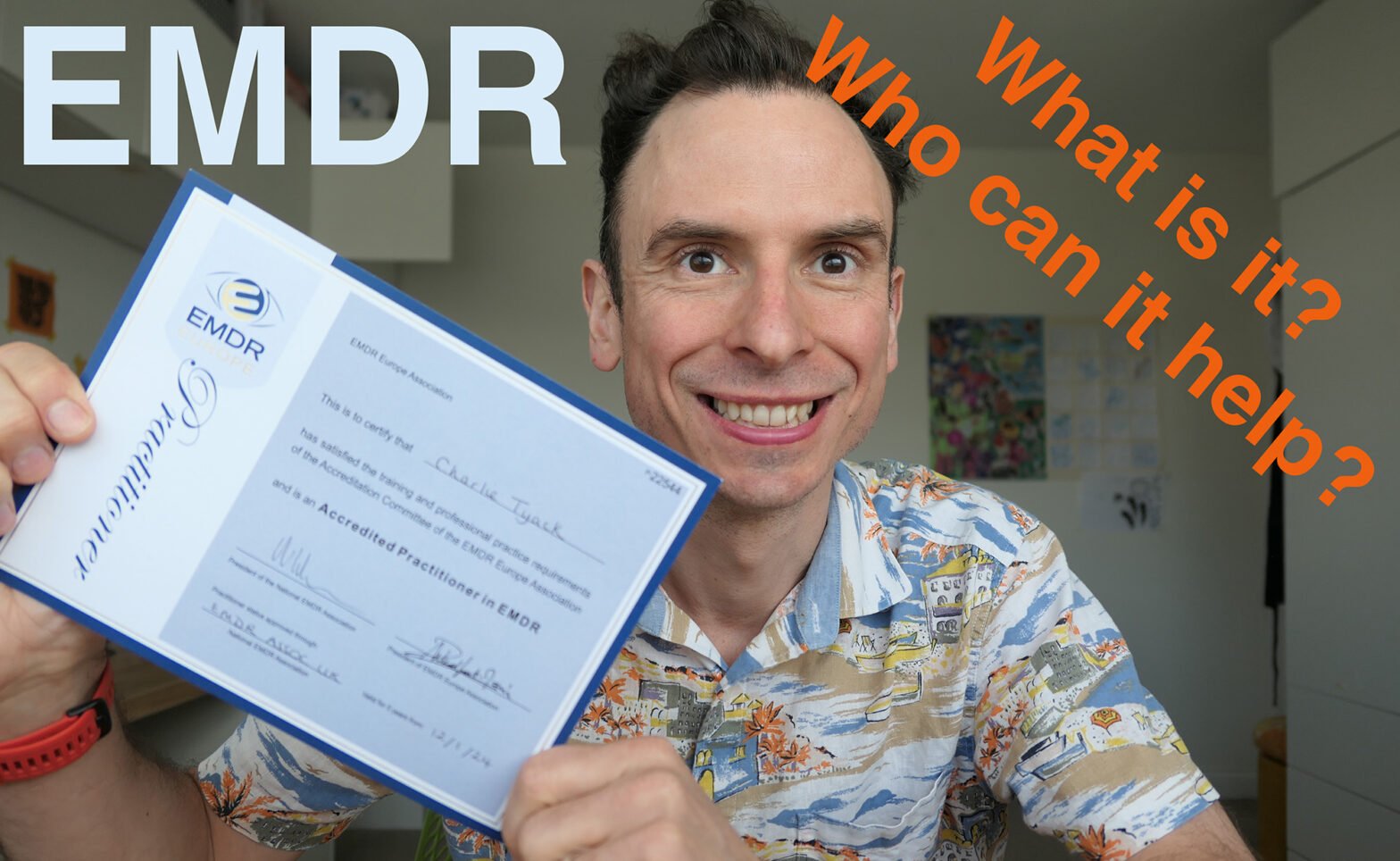
    I am officially an EMDR Europe Accredited Practitioner. I am chuffed to be Accredited, having practised EMDR (Eye Movement Desensitisation and Reprocessing) since becoming an EMDR Practitioner in 2021. Accreditation means that I have met the following criteria:

    • Completed a recognised EMDR Europe training – with EMDR Academy in the UK
    • Completed a minimum of 50 EMDR sessions (over 250 at the time of writing)
    • Treated a minimum number of 25 clients (over 50 at the time of writing)
    • Undertaken over 20 hours consultation/ clinical supervision with an EMDR Europe Consultant which includes witnessing my EMDR clinical work
    • Had my accreditation supported by an EMDR Europe Consultant and a colleague who vouched for my clinical practice.
    • Registered with EMDR UK.

    The process of accreditation was really helpful and educational, and it serves as quality assurance for potential clients. It has been a privilege to work with so many people and witness the effectiveness that EMDR can have in a relatively short time frame.

    EMDR is an evidence-based treatment that has been found to be effective with:

    • Post-Traumatic Stress Disorder (PTSD)
    • Complex PTSD
    • Anxiety
    • Panic attacks
    • Phobias
    • Performance anxiety
    • Nightmares
    • Chronic illness
    • Depression
    • Grief and loss
    • Pain
    • Addictions
    • Behavioural issues
    • Relationship issues

    Please see the video at the top of this post for more information about EMDR.

    If you have any questions about EMDR, please do get in touch or leave a comment.

  • Thinking of trying EMDR?

    Thinking of trying EMDR?

    As an “EMDR Practitioner”, qualified to work with adults and children, EMDR is one of the therapies I offer. Whilst it was originally developed for helping people to overcome traumatic experiences, it has since been found to be effective in treating a wide range of other concerns including:

    • Anxiety
    • Panic attacks
    • Phobias
    • Performance anxiety
    • Nightmares
    • Chronic illness
    • Depression
    • Grief and loss
    • Pain
    • Addictions
    • Behavioural issues
    • Relationshiop issues

    The first stage of EMDR therapy involves assessment of the current problems, and what the client wants to work on. Sources of support and techniques to stay grounded and manage difficult symptoms are also explored and practiced. A plan is made collaboratively, taking into account past experiences, how their effects are manifesting in the present, and the client’s hopes for the future. Techniques the client can use to stay well in the here and now are also explored and strengthened before embarking on processing. Once the client feels ready, EMDR processing can begin.

    The process involves the client bringing a target memory to mind, and the therapist supporting them to make side-to-side movements with their eyes, arms or via tracking sounds or tactile stimulation. It is thought that these side-to-side movements help the mind to shift into a mode where it is able to process unpleasant memories, taking away their power. This does not mean that the memories are gone, but the client’s relationship with them shifts to a more manageable, healthy one. Some people describe it as shifting from having a traumatic, vivid and visceral memory to simply “something that happened”. They might also find that their physical symptoms, such as pain or tension, improve.

    EMDR Association explanation video
    Prince Harry talks about his experiences of EMDR

    EMDR can be helpful for adults and children. Adaptations can be made for people at different developmental levels and with different sensory needs.

    EMDR association explanation video for children

    You are welcome to contact me if you would like to explore EMDR therapy options.

  • Published – ACT for non-epileptic seizures

    Published – ACT for non-epileptic seizures

    The article Dr Naomi Boycott and I wrote about using Acceptance and Commitment Therapy for the treatment of non-epileptic seizures was recently published in the British Psychological Society’s Clinical Psychology Forum (Issue 347). It focuses on a service we developed for people who experience non-epileptic seizures, seeing people individually and in groups.

    We felt that ACT was an especially appropriate model for helping people to manage their non-epileptic seizures for various reasons. These included the focus on living a life in a way that does justice to our values, the use of mindfulness processes to increase present-moment awareness and reducing experiential avoidance, as well as the emphasis on pain being a necessary part of living a full life. Russ Harris’s excellent Embracing Your Demons article gives a concise overview of ACT. We found that the model was generally well accepted. We also brought in strategies from more traditional CBT approaches and Compassion-Focussed Therapy as well as systemic and psychodynamic ways of formulating and working.

    We found a range of resources that proved useful along the way. Here’s a selection of them:

    Dis-Sociated – a documentary by Clea Martin:


    Apps

    myFND – a clear and simple app for people who experience functional symptoms

    Neurosymptoms FND Guide – an app version of Prof John Stone’s very informative Neurosymptoms website

    Smiling Mind – a high quality free mindfulness app with meditations for people across the whole age range, and focussed on a variety of concerns


    Books

    View From The Floor by Kate Berger

    Psychogenic Non-Epileptic Seizures: A Guide by Lorna Myers

    Not There – a Graphic Novel about non-epileptic seizures


    Websites

    Psychogenic Non-Epileptic Seizures – an informative website edited by a wide range of experts in the field

    Non-Epileptic Attacks – a UK-based site

    FND Hope

    Neurosymptoms

  • Psychological First Aid during COVID-19

    Psychological First Aid during COVID-19

    “Extraordinary”, “weird” and “unprecedented” seem to be watchwords of the times we are living through. I keep hearing people describe the present, and situations that arise using these and similar expressions, perhaps to remind ourselves that it is okay not to know exactly how we should be responding. We encourage each other to “stay safe”, although I can’t help but notice a little spike of anxiety whenever I hear it. Battling a foe as nebulous as COVID-19 is anxiety provoking, as we naturally seek certainty, which is scarce at this stage.

    (more…)
  • UCLH CFS/ME Course

    UCLH CFS/ME Course

    The UCLH Chronic Fatigue Syndrome / Myalgic Encephalomyelitis (CFS/ME) in Young People course on November 1st 2018 was a fascinating day, with opportunities to learn more about the condition from the perspectives of alumni of the service, as well as members of the medical and psychological teams.

    Dr Lee Hudson gave an overview of the CFS/ME from the perspective of a consultant paediatrician. It was interesting to hear how there is no consistent, specific medical diagnostic test or treatment for CFS/ME. Rather, it is a diagnosis of exclusion, as other possible causes for the condition need to be ruled-out, meaning that people’s journey to diagnosis can be convoluted and tiring in itself, involving many tests. Lee quoted Voltaire in his talk:

    “The art of medicine consists of amusing the patient while nature cures the disease.”

    Voltaire

    Dr Hudson described how prior to CFS / ME being diagnostic labels, previous labels applied to what might be the same group of conditions included Da Costa’s Syndrome / Soldier’s Heart, postviral fatigue syndrome, and Royal Free Disease.

    Dr Mike Farquhar gave a talk on sleep and CFS/ME. He echoed the sense of mystery around CFS/ME by showing a standard hypnogram and then one for someone with CFS/ME (the same image). This emphasised the point that there is no unique hallmark to the impact the CFS/ME has on an individual’s sleep. He explored the distinction between sleepy-tiredness and fatigue, with a sleep-deprived individual at one end of the continuum, and someone with chronic fatigue at the other – desperately fatigued, but often frustratingly unable to sleep. Mike described how young people with CFS/ME diagnoses might attend the sleep clinic, and their route through the clinic is often to have sleep assessments via actigraphy and perhaps overnight studies in the lab, to exclude the possibility of specific sleep conditions that might also be impacting on their daytime functioning, followed by recommendations to optimise their sleep.

    Prof Deborah Christie and Dr Halina Flannery led the session on psychological support offered by the clinic, playfully titled Why not CBT, or why NOT CBT?  This covered the general approach that they have found to be most helpful with young people with CFS/ME diagnoses. Resistance to a psychological approach is often considerable at the beginning of people’s journeys, as people feel they are physically ill primarily, and that psychological aspects are not a part of the condition. Setting up an environment that allows people to feel safe is key, and this involves appreciative freetalk, establishment of a shared agenda, future-scaling and communicating with more than words, or indeed without words if this is more comfortable.

    Deborah and Halina outlined Creative Psychological Therapy, an integrative systemic way of working that champions positive stories, collaboration, circular rather than linear ways of thinking about the factors interacting in people’s lives, cultural aspects, and communication. These five Cs were in evidence throughout the psychological sessions, and indeed it was clear that they had permeated the practice of the entire team, which was fantastic to see in action. Narrative approaches were described, and creative ways to align narrative work with people’s experiences were explored, including potentially designing a Fortnite-style gaming experience around someone’s journey with CFS/ME.

    The panel session with alumni of the service was truly inspirational – hearing the young people’s brave openness to reflect on their journeys, and how a combination of support and benevolent challenge and pacing had helped them to expand and reinvent their lives, and think about their priorities was really powerful and brought the learning to life. It was an honour to hear people’s stories, and the interactive Witnessing Outsider Witnessing workshop at the end of the day was an opportunity to bring it all together. I volunteered as an Outsider Witness – I always break under high-pressure volunteering situations! This comprised answering four questions:

    1. What struck you from the stories? (Identifying the expression)
    2. What image or metaphor did this trigger? (Describing the image)
    3. How does this resonate with your experiences? (Personal resonance)
    4. Where will this take you in your life? (Acknowledging transport)

    Whilst I obviously cannot answer the first two owing to confidentiality, I found that the whole day resonated with me strongly. At the age of 18, a GP said to me:

    You have tested positive for the Epstein-Barr Virus. You will feel awful for another three weeks. You will be depressed for a year. You will have low energy levels for the rest of your life. There is no treatment. Goodbye.

    My GP, 2000

    At the time, these words hit me like a ton of bricks. It was a turning point in my life, and paradoxically led to me taking more care of my health and wellbeing. Fortunately for me, whilst the early days were very difficult, my GP’s doomsaying lifelong prophesy was not fulfilled. I think the experience gave me a firm sense of the power of words to inflict damage or to heal, and certainly influenced the path I have followed since.

    Further reading & links

    • Christie, D., McFarlane, F., Casdagli, L., & Fredman, G. (2016). Witnessing outsider witnessing: A reciprocal witnessing workshop with young people reclaiming their lives back from pain and fatigue. Physical Medicine and Rehabilitation Research, 1. https://www.doi.org/10.15761/PMRR.1000122
    • Griffin, A., & Christie, D. (2008). Taking the psycho out of psychosomatic: Using systemic approaches in a paediatric setting for the treatment of adolescents with unexplained physical symptoms. Clinical child psychology and psychiatry, 13, 531-542. https://www.doi.org/10.1177/1359104508096769
    • Action for ME


  • Killing (your demons) with kindness

    Killing (your demons) with kindness

    A recent study has found evidence to suggest that performing acts of kindness can reduce the degree to which people with social anxiety avoid situations they might find anxiety-provoking.

    (more…)